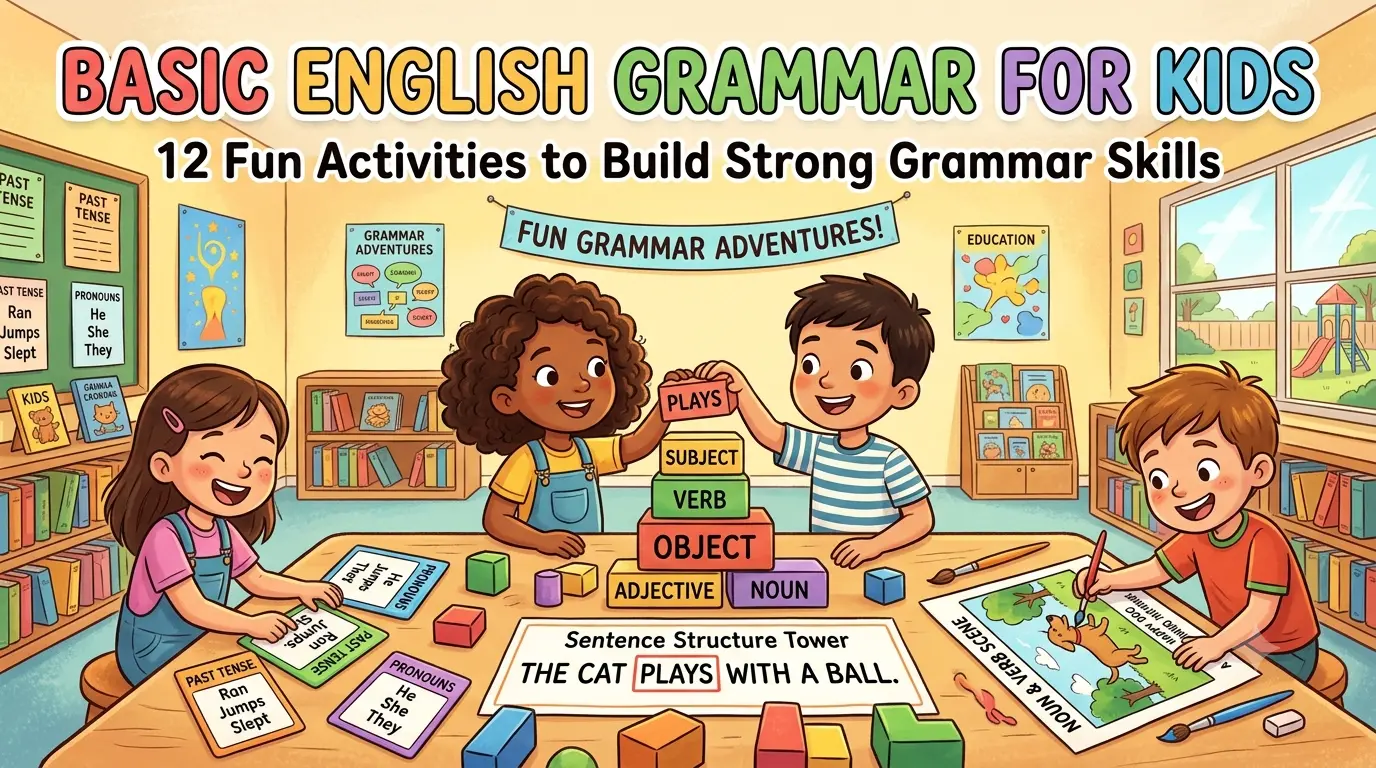
Grammar for Kids, Complete Parent’s Guide for Ages 4 to 10
Introduction
Grammar for kids is one of the most important foundations for reading, writing, communication, and academic success. Grammar for kids does not have to begin with difficult rules or long worksheets. Children learn grammar naturally when they explore language through stories, conversations, hands-on activities, and structured practice.
Many parents search for grammar for kids, grammar worksheets, grammar books, grammar games, and English grammar activities because they want to help their children speak and write confidently. The challenge is choosing the right learning method for the child’s age and stage of development.
This guide explains everything parents need to know about grammar for kids, including when to start, how to teach grammar at home, age-wise learning milestones, grammar activities, worksheets, books, and a structured learning pathway that helps children build confidence step by step.
Table of Contents
- What Is Grammar for Kids?
- Why Grammar Is Important
- When Should Children Start Learning Grammar?
- Grammar for Ages 4 to 5
- Grammar for Ages 6 to 8
- Grammar for Ages 9 to 10
- Grammar Activities for Kids
- Grammar Worksheets for Kids
- Grammar Books for Kids
- Grammar Games for Kids
- How to Teach Grammar at Home
- Common Grammar Mistakes Parents Make
- Lilara Grammar Learning Path
- Frequently Asked Questions
What Is Grammar for Kids?
Grammar for kids is the process of helping children understand how words work together to create meaningful sentences. Grammar includes learning nouns, verbs, adjectives, pronouns, articles, prepositions, tenses, conjunctions, punctuation, and sentence structure.
Instead of memorising rules, children learn grammar best by seeing, hearing, and using language in everyday situations. Reading books, listening to stories, speaking with family members, and completing interactive grammar activities all help children understand grammar naturally.
Why Grammar Is Important for Kids
Strong grammar skills help children:
- Read with better understanding
- Write complete and meaningful sentences
- Express ideas clearly
- Build confidence in communication
- Improve school performance
- Develop vocabulary naturally
Grammar is not just about avoiding mistakes. It helps children organise their thoughts and communicate effectively throughout life.
When Should Children Start Learning Grammar?
Children begin learning grammar much earlier than many parents realise.
Ages 4 to 5
Children start recognising:
- Nouns
- Verbs
- Articles
- Simple adjectives
- Question words
- Basic sentence formation
Learning should be activity-based and visual.
Ages 6 to 8
Children become ready for:
- Subject-verb agreement
- Sentence types
- Pronouns
- Tenses
- Degrees of comparison
- Singular and plural rules
- Vocabulary expansion
Ages 9 to 10
Children can understand:
- Active and passive voice
- Verb forms
- Perfect tenses
- Continuous tenses
- Modals
- Homophones
- Homonyms
- Prefixes and suffixes
Each stage builds on the previous one. Teaching advanced grammar before a child understands the basics often leads to confusion.
Grammar Activities for Kids
Interactive activities make grammar enjoyable and memorable.
Some of the most effective grammar activities include:
Sentence Building
Children arrange words to create complete sentences. This develops sentence structure and logical thinking.
Noun and Verb Sorting
Sorting activities help children recognise different parts of speech while expanding vocabulary.
Question Word Practice
Daily conversations using who, what, where, when, why, and how improve language confidence.
Picture Description
Children describe pictures using complete sentences, encouraging grammar, vocabulary, and observation skills together.
Story Completion
Short storytelling activities help children apply grammar naturally while developing creativity.
Grammar Worksheets for Kids
Grammar worksheets reinforce classroom learning through repetition.
Parents often search for:
- grammar worksheets for kids
- grammar worksheets PDF
- grammar worksheets for Class 1
- grammar worksheets for Class 2
- grammar worksheets for Class 3
Worksheets are useful, but they become even more effective when children can practise repeatedly instead of using a sheet only once.
Grammar Books for Kids
A good grammar book should:
- Follow age-appropriate progression
- Include colourful illustrations
- Encourage interactive learning
- Build concepts gradually
- Include regular practice activities
Traditional grammar books explain concepts well, but younger children often learn faster through hands-on activities that allow them to interact with grammar rather than simply read about it.
How Lilara Makes Grammar Learning Practical
Many parents find it difficult to decide what grammar concepts to teach first. Lilara has designed a structured grammar pathway that grows with the child instead of relying on disconnected worksheets or multiple books.
Perfect for children beginning grammar.
Children learn:
- Articles
- Nouns
- Verbs
- Adjectives
- Pronouns
- Prepositions
- Adverbs
- Compound Words
- Conjunctions
- Interjections
- Is, Am, Are
- Question Words
- Calendar Concepts
With more than 130 reusable laminated cut-outs, children learn by doing rather than memorising.
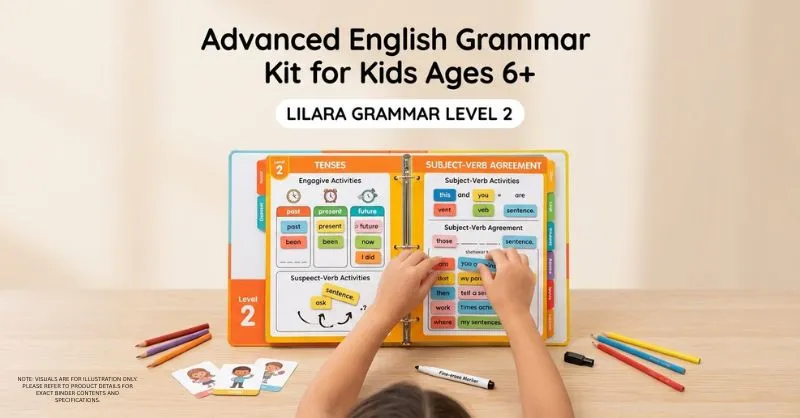
Once children understand the basics, they move to more advanced grammar concepts.
Level 2 introduces:
- Subject-Verb Agreement
- Types of Sentences
- Do, Does, Did, Done
- Has, Have, Had
- Present, Past, and Future Tenses
- Degrees of Comparison
- Types of Nouns
- Types of Pronouns
- Singular and Plural Rules
- Contractions and Possessives
The reusable format encourages repeated practice without wasting paper.
Level 3 prepares children for advanced grammar and stronger writing.
Topics include:
- Verb Forms
- Active and Passive Voice
- Modals
- Perfect Tenses
- Continuous Tenses
- Homophones
- Homonyms
- Prefixes
- Suffixes
Children develop confidence in school English while improving analytical thinking and sentence construction.
Lilara Grammarling Combo Pack
The Grammarling Combo Pack combines Levels 1, 2, and 3 into one structured learning pathway.
Instead of switching between multiple books and worksheets, children progress through carefully planned grammar concepts at their own pace. This makes it an excellent choice for families who want a complete English grammar learning system from beginner to advanced levels.
Why Reusable Grammar Learning Works
Children rarely master grammar after one lesson. They learn through repetition, correction, and regular practice.
Reusable grammar activities allow children to:
- Practise multiple times
- Learn independently
- Correct mistakes confidently
- Build long-term understanding
- Reduce paper waste
This approach combines Montessori-inspired learning with structured English grammar practice.
Frequently Asked Questions
What is grammar for kids?
Grammar for kids is the process of teaching children how words work together to form correct and meaningful sentences through age-appropriate activities and practice.
At what age should children start learning grammar?
Children can begin learning basic grammar concepts from around four years of age through play-based and interactive activities.
What is the best way to teach grammar at home?
Daily reading, conversations, storytelling, sentence-building games, and structured reusable grammar activities help children understand grammar naturally.
Are grammar worksheets enough?
Worksheets are helpful for practice, but combining them with reusable activities and hands-on learning improves understanding and retention.
Which grammar learning resource is best for children?
The best grammar learning resource depends on the child’s age and current level. A structured progression, such as Lilara Grammar Levels 1, 2, and 3, helps children build grammar skills step by step.