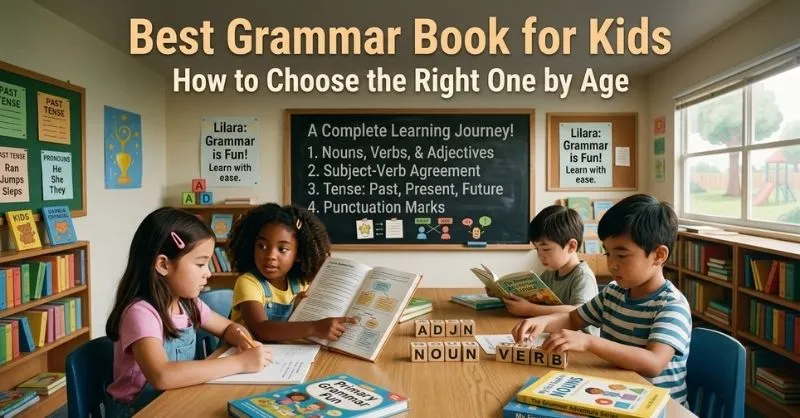
Best Grammar Book for Kids, 10 Smart Ways to Choose by Age
Best Grammar Book for Kids, 10 Smart Ways to Choose by Age Best grammar book for kids is a search many parents make when their






Best Grammar Book for Kids, 10 Smart Ways to Choose by Age Best grammar book for kids is a search many parents make when their
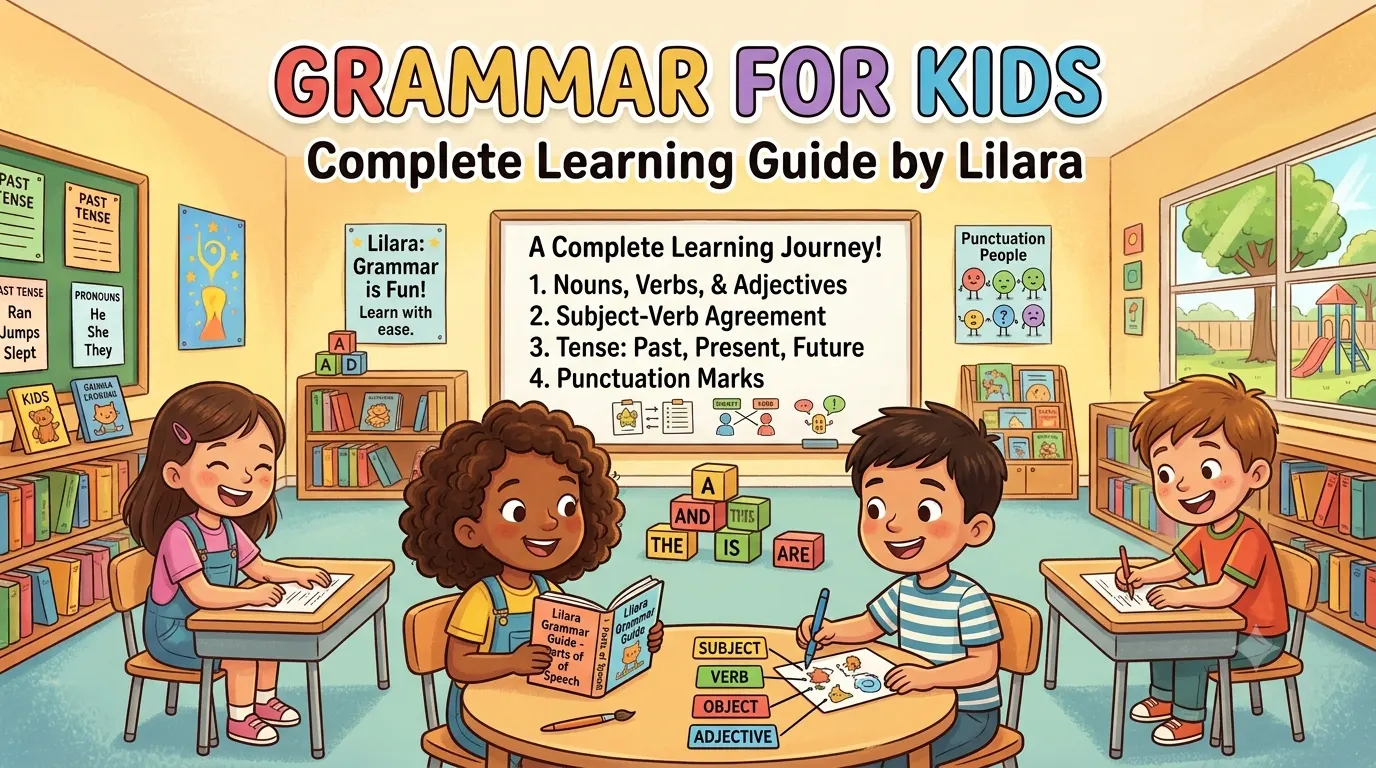
Grammar for Kids, Complete Parent’s Guide for Ages 4 to 10 Introduction Grammar for kids is one of the most important foundations for reading,
Advanced English Grammar for Kids, 10 Powerful Skills Every Child Needs Advanced English Grammar Kit for Kids Advanced English Grammar Kit for Kids helps
Best grammar book for kids is a search many parents make when their child starts learning nouns, verbs, sentences, tenses, and other English grammar concepts. But choosing the right resource is not always simple.
A grammar book that works well for one child may be too basic, too advanced, or simply uninteresting for another. Age matters, but so does the child’s current understanding of English, attention span, and ability to practice independently.
The best grammar book for kids is not necessarily the thickest book or the one with the most exercises. A useful grammar resource should introduce concepts in the right order, give children enough opportunities to practice, and help them understand how grammar works in real sentences.
In this guide, we will look at 10 smart ways to choose the best grammar book for kids, along with an age-wise grammar learning path from beginner concepts to advanced grammar.
The first question should not always be, “What class is my child in?”
Instead, ask:
A child who has a strong foundation may be ready to move ahead, while another child may benefit from revisiting the basics.
The best grammar book for kids should therefore match the child’s current grammar level rather than simply following their age or school grade.
Grammar works best when children learn concepts step by step.
For beginners, useful concepts include:
Once these concepts become familiar, children can gradually move towards subject-verb agreement, sentence types, tenses, contractions, possessives, and other advanced grammar topics.
Jumping directly into complicated grammar rules can make learning feel difficult. A structured progression helps children connect one concept with the next.
Traditional reading and written exercises are useful, but younger children often benefit from interacting with the lesson.
For example, instead of only reading about nouns and verbs, children can:
This is why parents searching for the best grammar book for kids may also consider grammar activity books and reusable learning resources.
Active learning gives children more than one way to understand a concept. They can see it, read it, touch it, and use it.
Understanding a grammar rule once does not always mean a child can use it correctly.
Grammar requires practice.
A good grammar resource should give children opportunities to revisit concepts and apply them in different situations. For example, learning what a verb is is only the first step. Children should also be able to identify verbs, use them in sentences, and recognize how they change in different contexts.
This is one reason reusable learning resources can be practical. Children can practice, correct mistakes, erase, and try again.
For parents comparing a grammar book for kids with ordinary worksheets, repeated practice can be an important factor.
Younger children may not always enjoy completing page after page of written exercises.
A reusable grammar binder can combine grammar practice with hands-on learning.
Lilara Grammarling Level 1 is designed as an early grammar learning resource for children aged 4 and above.
It introduces 13 grammar concepts, including:
With more than 130 reusable laminated cutouts and Velcro-based activities, children can interact with grammar concepts instead of only reading about them.
For a child starting their grammar journey, the best grammar book for kids may be one that makes the basics easier to understand and practice repeatedly.
As children become more comfortable with basic grammar, they need resources that help them apply rules in more detailed ways.
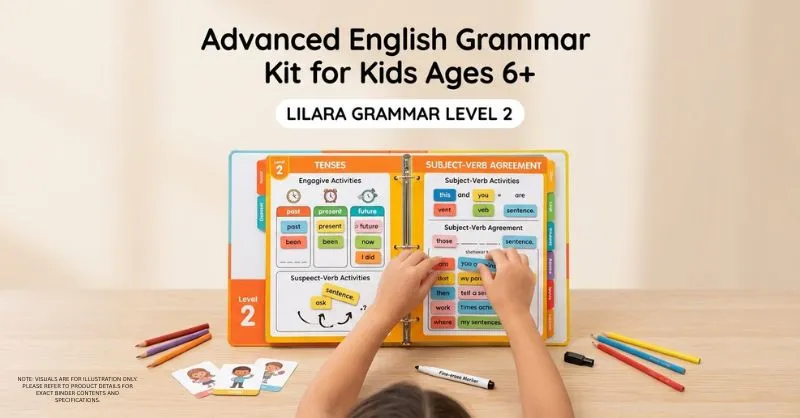
Lilara Grammar Level 2 builds on foundational grammar and introduces concepts such as:
The activities are designed for repeated practice through reusable, laminated materials and more than 140 cutouts.
This stage can be particularly useful for children developing stronger sentence formation and writing skills.
Advanced grammar makes more sense when children already understand the basics.
A child who can confidently work with sentence structure, nouns, verbs, pronouns, and basic tenses may be ready to explore more detailed language concepts.
Lilara Grammar Level 3 introduces advanced concepts including:
This level is designed for children who are ready to strengthen grammar knowledge, vocabulary, reading comprehension, writing, and sentence construction.
The best grammar book for kids should grow with the learner instead of presenting every grammar topic at the same level of difficulty.
One of the most important things to look for when choosing the best grammar book for kids is progression.
Grammar concepts become easier to understand when children move from simple ideas to more complex ones. Educational publishers such as Oxford also structure grammar learning across age and skill levels rather than presenting every concept at once.
A practical learning path could look like this:
Stage 1: Foundation
Articles → Nouns → Verbs → Adjectives → Pronouns → Sentence building
Stage 2: Application
Subject-verb agreement → Types of sentences → Tenses → Comparison → Possessives
Stage 3: Advanced Understanding
Verb forms → Active and passive voice → Modals → Perfect tenses → Word structure
This progression is important because grammar is cumulative. Children who understand how words function in a sentence are generally better prepared to explore more complex grammar structures.
Grammar should not stop at identifying the correct answer in an exercise.
Children also need opportunities to use what they learn through:
The British Council notes that children benefit from opportunities to experiment with grammar and use it for communication, rather than only recognizing rules or completing isolated activities.
This is an important question for parents choosing the best grammar book for kids.
Ask:
Can my child use this grammar concept after completing the activity?
For example, after learning about adjectives, can the child describe an object using adjectives? After learning a tense, can they use it while telling a story?
A strong grammar resource should gradually connect practice with actual language use.
The most educational resource in the world is not helpful if it remains closed on a shelf.
Children are more likely to return to grammar practice when the material feels approachable and manageable.
Look for resources that are:
The British Council’s grammar resources, for example, combine grammar rules with games, printable activities and practice materials, showing how explanation and interaction can work together in children’s grammar learning.
For younger learners especially, a mix of explanation, activity and repetition can make grammar practice feel less overwhelming.
Choosing by age is useful, but parents should also consider the child’s current grammar understanding.
At this stage, children are beginning to recognize how words work in sentences.
The focus should be on:
A child does not need to memorize complicated grammar definitions. The goal is to build familiarity through repeated exposure and practical examples.
Lilara Grammarling Level 1 is designed for children aged 4 and above who are beginning their grammar learning journey.
The binder covers 13 foundational concepts and includes more than 130 reusable laminated cutouts. Its hands-on format allows children to sort, match and practice concepts repeatedly.
For parents searching for a grammar book for a 4 year old, grammar book for a 5 year old, or a beginner grammar book for kids, a structured activity-based resource can provide a useful starting point.
Children in this stage can begin applying grammar rules more consciously.
Useful concepts include:
Oxford’s primary grammar guidance also shows how grammar expectations become progressively more detailed as children move through the primary years.
Lilara Grammar Level 2 is designed for children aged 6 and above.
It builds on foundational grammar with 10+ activities and more than 140 reusable cutouts. Children can practice concepts including tenses, subject-verb agreement, sentence types and other important grammar skills.
For parents searching for the best grammar book for a 6 year old, a grammar book for Class 2, or a grammar book for Class 3, the most important factor is whether the child already understands the basic building blocks of grammar.
Older children are ready to explore grammar in greater depth.
Depending on their level, they may work with:
Grammar learning at this stage should increasingly connect with reading comprehension and writing.
Lilara Grammar Level 3 is designed for children aged 10 and above who are ready to move beyond foundational grammar.
The reusable activity format introduces more advanced concepts while continuing the structured learning path established in the earlier levels.
For parents searching for an advanced grammar book for kids, grammar book for a 10 year old, or an English grammar resource that supports stronger writing and language understanding, choosing the right level is more important than choosing the most difficult book.
Some parents do not want to buy a different grammar resource every time their child progresses.
They want a clear path.
This is where a level-based grammar system can be useful.
The Lilara Grammarling Combo Pack brings together:
Grammarling Level 1
Foundational grammar for children aged 4+
Grammar Level 2
Progressive grammar practice for children aged 6+
Grammar Level 3
Advanced grammar concepts for children aged 10+
Instead of treating grammar as separate topics or disconnected worksheets, the three levels create a structured pathway from early grammar concepts to more advanced language skills.
For parents looking for a complete grammar learning kit for kids, this approach can make it easier to follow a child’s progress over time.
Parents often search for all three.
But each serves a different purpose.
| Learning Resource | Best For |
|---|---|
| Grammar book | Learning and revising concepts |
| Grammar worksheets | Focused written practice |
| Grammar activities | Interactive learning and engagement |
| Reusable grammar binder | Repeated hands-on practice |
There does not have to be only one method.
A child might read a concept, practice it through an activity, and then apply it in writing.
The best grammar book for kids can therefore be part of a wider learning routine rather than the only resource a child uses.
You do not need to turn your home into a classroom.
A few minutes of regular practice can be more useful than forcing a child to complete a large number of exercises at once.
Try this simple routine:
Read stories and ask children to notice interesting words and sentences.
Ask simple questions such as:
“What is the action word?”
“Which word describes the cat?”
“Who is doing the action?”
Give children a few words and ask them to create a sentence.
Use a worksheet, grammar book, or reusable activity to reinforce the concept.
Encourage the child to use the grammar concept in conversation or writing.
This approach combines understanding with practice and application.
Two children in the same class may have different levels of grammar understanding.
Check the child’s foundation before selecting the next level.
Advanced topics may look impressive, but children need foundational knowledge first.
Worksheets are useful, but some children benefit from visual and hands-on practice as well.
Grammar develops through exposure and practice. One activity may introduce a concept, but children usually need opportunities to revisit it.
The goal is not only to remember definitions. Children should understand how grammar works when they speak, read and write.
The best grammar book for kids depends on where the child is in their learning journey.
For beginners, focus on simple concepts and sentence building.
For children with a foundation, introduce structured practice with tenses, sentence types and grammar rules.
For older learners, move towards advanced grammar, writing and deeper language understanding.
Lilara’s grammar learning pathway follows this progression:
Start with Grammarling Level 1, Ages 4+
↓
Progress to Grammar Level 2, Ages 6+
↓
Move to Grammar Level 3, Ages 10+
↓
Choose the Grammarling Combo Pack for a complete structured pathway
The aim is not simply to finish another grammar book. It is to help children gradually understand how English works and build the confidence to use it.
The best grammar book for kids is one that matches the child’s current learning level, introduces concepts progressively and provides enough opportunities for practice.
A 4 year old can begin exploring simple concepts such as nouns, verbs, adjectives, articles, question words and basic sentence formation through age-appropriate activities.
A grammar resource for a 6 year old should build on basic concepts and introduce topics such as sentence types, subject-verb agreement and early tense practice based on the child’s readiness.
Neither is automatically better. Grammar books can explain concepts, while activity-based resources can provide more interactive practice. Combining both approaches can work well.
Reusable grammar binders can support repeated practice because children can complete activities, correct mistakes and revisit concepts multiple times.
Yes. Children can begin understanding grammar through reading, speaking, sentence building, stories and activities. As their understanding grows, formal grammar rules can provide additional structure.
Grammarling Level 1 focuses on foundational concepts for children aged 4+. Grammar Level 2 builds towards structured grammar practice for children aged 6+. Grammar Level 3 introduces more advanced grammar concepts for children aged 10+.
The Combo Pack provides Levels 1, 2 and 3 as a structured grammar learning pathway, making it suitable for parents who want resources covering foundational through advanced grammar practice.
Finding the best grammar book for kids is not about choosing the biggest book, the hardest exercises, or the resource with the most pages.
It is about choosing the right starting point.
Children benefit when grammar learning follows a clear progression, includes regular practice and gives them opportunities to use what they learn. Level-based learning is also reflected in established children’s grammar resources, where grammar concepts and expectations become progressively more complex with age and stage.
For families looking for a hands-on, reusable grammar learning path, Lilara Grammarling Levels 1, 2 and 3 offer a progression from foundational concepts to advanced grammar practice. The Grammarling Combo Pack brings all three stages together for children who need a longer-term learning pathway.
For additional grammar practice ideas, parents can also explore British Council LearnEnglish Kids grammar practice, which includes grammar activities, games and printable resources.
Best Grammar Book for Kids, 10 Smart Ways to Choose by Age Best grammar book for kids is a search many parents
Grammar for Kids, Complete Parent’s Guide for Ages 4 to 10 Introduction Grammar for kids is one of the most important
Advanced English Grammar for Kids, 10 Powerful Skills Every Child Needs Advanced English Grammar Kit for Kids Advanced English Grammar Kit
Basic English Grammar for Kids – 12 Fun Activities Every Parent Should Try Introduction Basic English grammar for kids is one of