10 Best English Learning Activities for Kids at Home
English learning activities for kids help children improve grammar, vocabulary, reading, phonics, writing, and communication skills naturally at home. Parents searching for English learning activities for kids often look for simple and engaging ways to support language development step by step.
Here are 10 effective English learning activities for kids that support language development at home.
Why English Learning Activities for Kids Matter
Best English Learning Activities for Kids at Home
Grammar and Vocabulary English Learning Activities for Kids
Table of Contents
- Phonics Sound Activities
- Alphabet Recognition Games
- Vocabulary Building Activities
- Reading Aloud Practice
- Picture Reading Activities
- Sentence Formation Practice
- Grammar Activities for Kids
- Storytelling Activities
- Writing Practice Activities
- Daily English Conversation Practice
1. Phonics Sound Activities
Phonics activities help children connect sounds with letters and words.
Popular phonics activities for kids include:
• beginning sound games
• letter sound matching
• phonics word reading
• sound blending activities
Parents searching for phonics activities for kids often look for hands on learning methods that improve reading confidence.
2. Alphabet Recognition Games
Alphabet recognition is one of the first stages of English learning for kids.
Simple activities include:
• letter matching
• alphabet tracing
• uppercase and lowercase sorting
• alphabet flashcards
These activities strengthen early reading readiness.
3. Vocabulary Building Activities
Vocabulary activities improve language understanding and communication skills.
Good vocabulary activities include:
• picture word matching
• naming objects
• learning opposite words
• daily word practice
Children with stronger vocabulary usually develop better sentence formation skills.
4. Reading Aloud Practice
Reading aloud improves pronunciation, listening, and confidence.
Parents can:
• read short stories daily
• encourage children to repeat sentences
• practice simple word reading
Reading activities also help children understand grammar naturally through exposure.
5. Picture Reading Activities
Picture reading helps children describe what they observe using words and sentences.
This improves:
• observation skills
• vocabulary
• communication confidence
Children begin forming meaningful sentences through visual learning.
6. Sentence Formation Practice
Sentence building is one of the most important English learning activities for kids.
Simple exercises include:
• arranging words into sentences
• filling missing words
• describing pictures using sentences
These activities strengthen writing and communication.
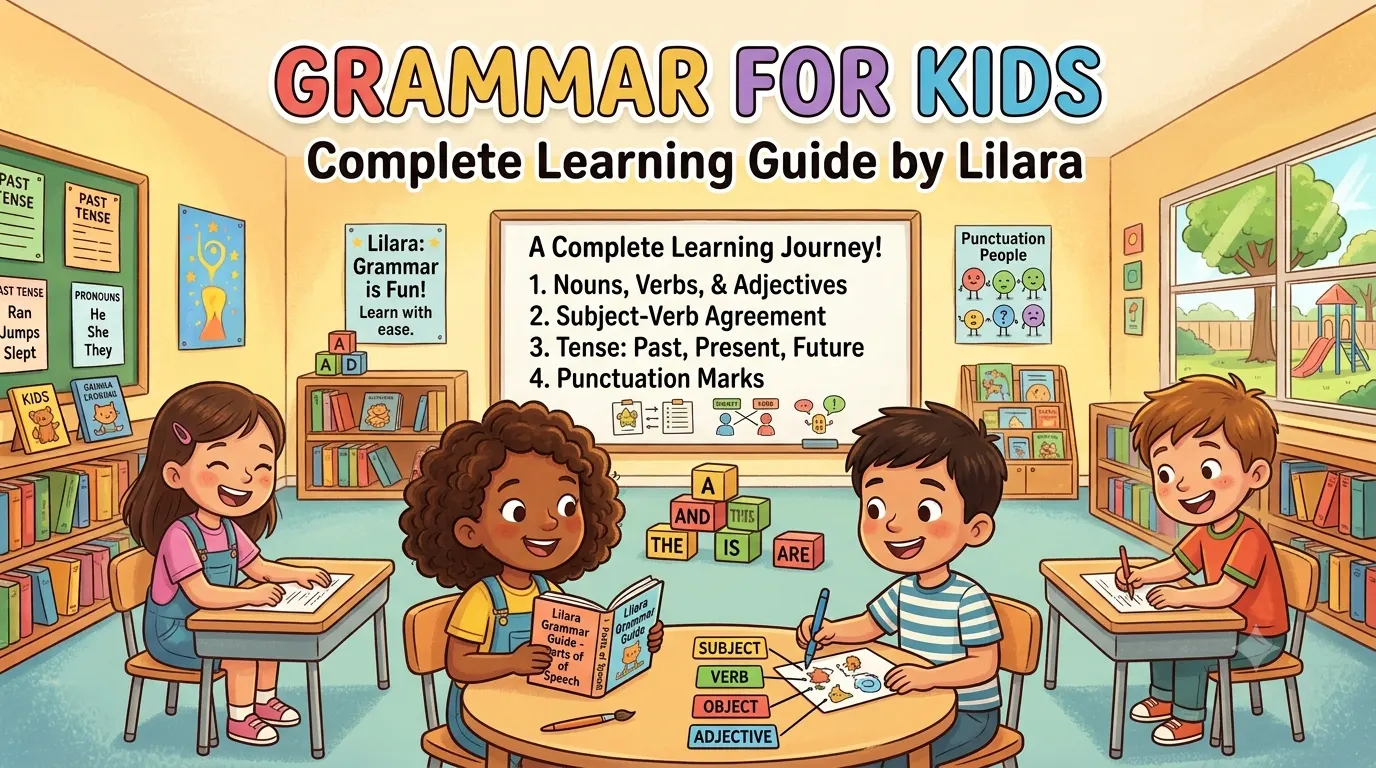
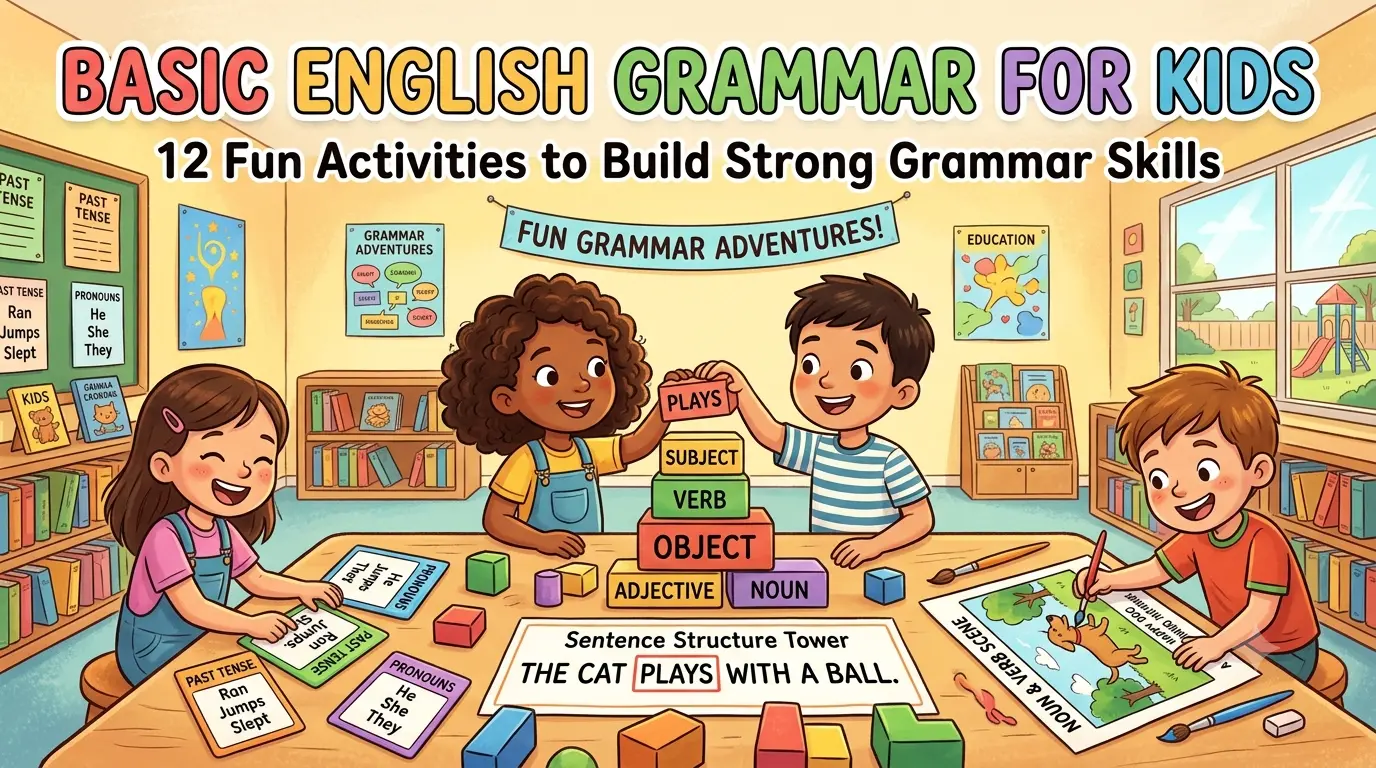
7. Grammar Activities for Kids
Grammar activities help children understand how language works.
Popular searches include:
• grammar for kids
• grammar worksheets for kids
• grammar book for kids
• kids grammar activities
Children learn grammar better through structured practice and repetition.
Helps children learn:
• nouns
• verbs
• adjectives
• articles
• sentence basics
Ideal for children beginning grammar learning.
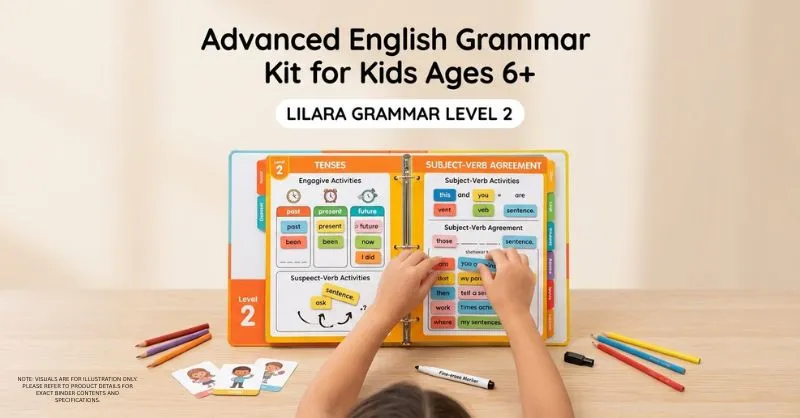
Supports:
• tenses
• pronouns
• subject verb agreement
• sentence structure
Helps improve writing confidence and communication.
Covers advanced topics like:
• active and passive voice
• modals
• homophones
• advanced grammar structures
Designed for deeper language development.
A complete grammar and language learning system for children progressing from beginner to advanced grammar concepts.
8. Storytelling Activities
Storytelling improves imagination and speaking confidence.
Parents can encourage children to:
• narrate stories
• describe daily events
• retell stories in their own words
This naturally improves vocabulary and grammar usage.
9. Writing Practice Activities
Writing activities help children organise thoughts clearly.
Simple writing activities include:
• tracing
• copying words
• writing short sentences
• journal writing
Consistent writing practice improves grammar and sentence clarity.
10. Daily English Conversation Practice
Regular conversations help children apply language naturally.
Parents can encourage:
• simple daily English speaking
• asking and answering questions
• describing objects and actions
Daily communication practice improves fluency and confidence over time.
Conclusion
English learning activities for kids become more effective when phonics, vocabulary, reading, grammar, and communication practice are combined together consistently.
Children learn best through consistent practice and structured learning activities.
By combining phonics activities with structured grammar learning tools like Lilara Grammar Levels 1,2,3 and the Grammarling Combo Pack, parents can help children build strong English communication skills confidently.
FAQ
What are the best English learning activities for kids?
Phonics, reading, vocabulary games, grammar activities, and storytelling are some of the best English learning activities for kids.
Why are phonics activities important?
Phonics activities help children connect sounds with words and improve reading confidence.
At what age should children start grammar learning?
Children can begin simple grammar activities after developing basic reading and vocabulary skills.
How do grammar activities help children?
Grammar activities improve sentence structure, writing clarity, and communication skills